The Water Line in the File: Selling a Flood-Risk Home Without an Agent in 2026
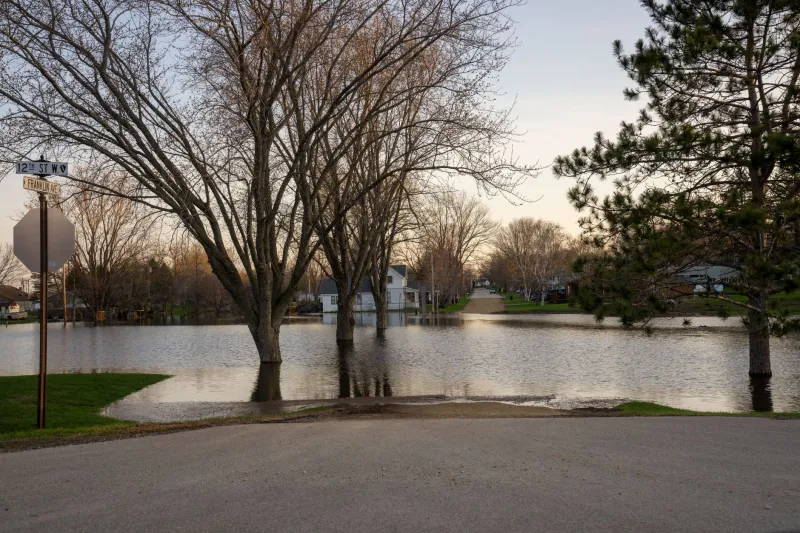
A home in a flood-risk area is not unsellable. It is, however, a home that invites questions. In an agent-led sale those questions are often filtered through an intermediary. In a private sale they arrive directly, sometimes early and sometimes after an offer has been accepted. The seller’s task is not to argue that the risk is unimportant. It is to make the risk understandable, evidenced and manageable, so that a buyer can reach a view without speculation filling the gap.
Begin with the map, but do not end there
The Environment Agency flood map is the natural starting point for most buyers in England, while Natural Resources Wales and the Scottish Environment Protection Agency provide equivalent information in their areas. A seller should check the property’s full address rather than a general postcode, note the date the map was accessed, and retain a copy for the file. The map may show risk from rivers and the sea, surface water, reservoirs or a combination of sources. Each source carries different implications and different evidence.
A map is a model, not a survey. It can indicate that a property sits within an area shown as having a chance of flooding without establishing the depth, frequency or precise pathway of water. That is why the phrase ‘maybe’ appears so often in flood conversations. The seller’s advantage lies in adding local detail: historic flood records held by the local authority, information from the lead local flood authority, drainage records, photographs, and any professional reports already commissioned. Where a property has never flooded, that fact is useful only if it can be supported. Where it has flooded, the date, cause, depth and remedial work should be recorded plainly.
Surface water is the quiet variable
Buyers often focus on rivers and the sea because those risks are visible on a map. Surface-water flooding can be less obvious and, in some urban and low-lying areas, more relevant. It occurs when heavy rainfall overwhelms drainage systems or runs over land before reaching a watercourse. A seller should check whether the property appears in surface-water risk mapping and whether the local authority has records of nearby incidents. Photographs of standing water in the road, a garden or a driveway should not be hidden; if they exist, they should be explained with dates and context.
For a private seller, this is a document-management exercise as much as a disclosure exercise. A buyer’s solicitor and lender will often ask similar questions. A coherent file reduces the risk of repeated requests and late surprises.
Insurance is part of the evidence
Buildings insurance is central to how buyers, and their mortgage lenders, assess a flood-risk property. A seller should obtain the current policy schedule and a letter or endorsement confirming flood cover, the excess that applies and any conditions attached to it. If the property has a claims history, that should be disclosed accurately. If cover is available only through a specialist insurer, or with a higher excess, the buyer needs to know early rather than after valuation.
Flood Re is relevant to many UK properties, but it is not a direct seller-to-buyer product. It operates through insurers and applies to eligible homes, generally those built before 2009, with conditions. A seller should not promise that a buyer will obtain the same terms. Instead, the file should show what cover exists now and what the seller has been told by the insurer or broker. That gives the buyer a basis for their own enquiries without turning the seller into an adviser.
Assemble a flood file
A practical flood file can be modest, but it should be organised. Suggested sections include flood-map extracts with dates; insurance schedules and covering letters; records of any historic flooding; photographs of resilience measures; invoices and warranties for works; maintenance records for drains, pumps, valves and gullies; and contact details for any professional who has advised on the property. Resilience measures might include non-return valves, airbrick covers, raised electrical sockets, tiled flooring, sump pumps or external groundworks. Resistance measures, such as flood barriers or door guards, should be photographed in place and stored with instructions.
The distinction between resistance and resilience matters. Resistance aims to keep water out. Resilience aims to reduce damage if water enters. A buyer will want to know which measures are present, who installed them, whether they have been maintained and what they are designed to achieve. A short maintenance schedule is often more persuasive than a folder of marketing claims.
Disclose in the listing, not at the eleventh hour
Private sellers are not relieved of the duty to answer questions honestly because no agent is involved. The property particulars should include a clear, neutral statement where flood risk is relevant, with a reference to the flood file or to further information available on request. The wording should avoid both alarmism and reassurance that cannot be supported. If the map shows a risk, the listing should say so in plain terms. If the property has been subject to flood-risk studies, those should be identified.
In England and Wales, the Property Information Form and the material information expected in property listings provide obvious places for accurate disclosure. In Scotland, the Home Report performs a different but related function. In every case, the seller’s aim is consistency: the listing, the forms, the insurance evidence and the answers given at viewings should tell the same story.
Answer buyer questions before they become negotiating points
A prepared seller can anticipate the usual enquiries. Has the property flooded? What insurance is available? What works have been carried out? How are they maintained? What do the local authority and lead local flood authority records show? Are there any proposed flood-defence schemes nearby? A short written response, with references to the file, is often more effective than a long verbal explanation at the door.
Where a buyer’s surveyor raises a concern, the seller should respond with evidence rather than opinion. If the concern is genuine and unresolved, it may be sensible to obtain an independent flood-risk assessment. That is a cost, but it can be cheaper than a renegotiation conducted without information. The seller should not guarantee that a property will never flood. They should demonstrate what is known, what has been done and what remains uncertain.
Negotiation with the water line in view
Flood risk can become a bargaining point, particularly in a slower market. A buyer may seek a reduction on the basis of insurability, excesses or perceived future costs. The seller’s response should separate evidenced costs from general unease. If a reduction is requested, ask for the basis: a specific insurance premium, a required survey, a repair estimate or a lender condition. A well-kept flood file will not eliminate negotiation, but it can keep the discussion anchored to facts.
A private sale in a flood-risk area depends on transparency. The seller who documents the risk clearly is not weakening their position; they are reducing the chance of a late withdrawal, a valuation problem or a dispute about what was known. In 2026, buyers are better informed and lenders more attentive to environmental risk. The water line in the file should be drawn early, plainly and with evidence.