Roots of the Matter: Documenting Japanese Knotweed for an Agent-Free Sale in 2026
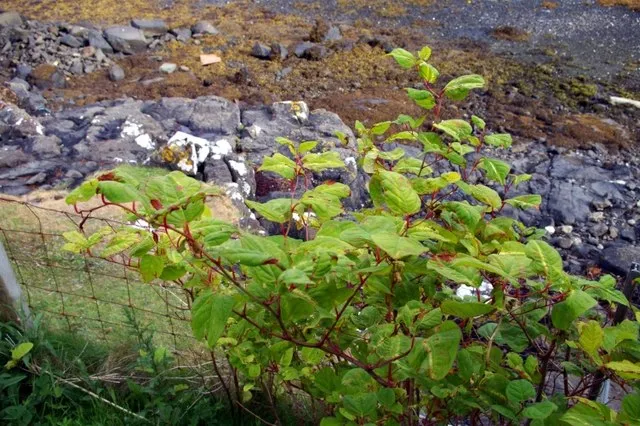
Photo: James Yardley, CC BY-SA 2.0, via Wikimedia Commons
Japanese knotweed has acquired a reputation that sometimes outstrips the physical threat. For a seller acting without an estate agency, however, the practical danger is rarely the plant itself. It is the gap between what the seller knows and what the buyer’s lender, surveyor and solicitor can verify. A private sale in 2026 can survive a knotweed finding, but it is much less likely to survive an incomplete or late disclosure.
Why the mortgage offer is the pressure point
A buyer’s mortgage application is often where knotweed first becomes urgent. Lenders commonly treat the presence of Japanese knotweed within a certain distance of the property as a valuation and risk question. Surveyors may report visible growth, and solicitors will raise enquiries based on the property information form and any local knowledge. If the answer is vague, the lender may delay, request a specialist report or decline the application altogether.
The seller’s task is therefore not to argue that knotweed is harmless. It is to make the position legible. A no-agency seller should assume that any known or suspected knotweed will be examined by a professional acting for the buyer, and should prepare the evidence before that examination begins. Concealment is not a neutral act; it can undermine the sale and create legal exposure long after completion.
What must go on the record
In England and Wales, the property information form completed by the seller asks directly about Japanese knotweed. The precise wording and form may change, but the principle is stable: the seller must answer honestly about knowledge and belief. That includes growth in the garden, growth on adjoining land that affects the property, previous treatment and any guarantees or management plans.
A useful private-sale file should include:
- a plan marking the affected area and the property boundary;
- dated photographs showing the extent of growth at each stage;
- contractor reports, invoices and treatment records;
- any insurance-backed guarantee, with its terms and transferability;
- correspondence with neighbours where treatment has crossed a boundary;
- confirmation of the current management position, including monitoring visits.
If the seller has no direct knowledge but visible growth has been reported, the honest answer is not a flat denial. It is a statement of what has been observed, what has been investigated and what remains uncertain. Buyers and their advisers can work with uncertainty that is disclosed. They struggle with contradictions.
Building a treatment file that lenders recognise
A treatment plan written on a single sheet of paper is unlikely to satisfy a cautious lender in 2026. Specialist contractors accredited by bodies such as the Property Care Association are generally better placed to produce a plan that a surveyor and lender will recognise. The plan should identify the extent of the infestation, set out a herbicide or excavation strategy, state the monitoring period and explain what happens if regrowth occurs.
An insurance-backed guarantee can be valuable, but only if the buyer understands what it covers. Sellers should check whether the guarantee is transferable, how long it runs, what exclusions apply and whether the insurer is regulated in the UK. A guarantee that expires before the buyer’s mortgage term begins to look thin is not a strong selling point. Nor should a seller describe a contractor’s informal assurance as an insurance-backed guarantee.
The file should also distinguish between treatment and eradication. Knotweed management is often a multi-year process, and lenders may accept a professional plan with monitoring rather than demanding that all growth has vanished. A seller who presents the plan as a maintenance regime, with dates and responsibilities, is usually in a stronger position than one who offers only a promise that the problem has gone away.
Boundary evidence and the neighbour question
Knotweed does not respect title plans. Growth on a neighbour’s land can affect a seller’s property, and treatment may require access across a boundary. In a private sale, this is where a good file becomes a boundary file as well as a weed file.
Sellers should keep a clear plan showing where the affected area sits in relation to the legal boundary. If treatment has taken place on adjoining land, written confirmation from the neighbour is more useful than a verbal account. If access has been granted, record the terms and dates. If the boundary itself is uncertain, say so and provide the documents that exist rather than asserting a position that the buyer’s solicitor may later challenge.
This evidence matters because a buyer’s lender may ask not only whether knotweed is present but whether the seller has the right to treat it and whether the property is exposed to untreated growth nearby. A measured, documented answer is more persuasive than a robust denial.
When to commission a survey
A seller who suspects knotweed should consider a specialist survey before marketing, not after a buyer’s surveyor raises it. Early instruction allows the seller to price the issue realistically, prepare a management plan and avoid the delay that follows a late finding. It also gives the seller control of the narrative in a private sale, where there is no agent to filter enquiries.
If the buyer’s survey identifies knotweed that the seller had not recorded, the response should be prompt and factual. The seller should obtain the surveyor’s report, compare it with their own records and, where necessary, commission an independent assessment. A quick, documented response is usually more effective than a long argument about the identification of the plant.
Answering the buyer’s solicitor without inflating the issue
The buyer’s solicitor will want documents, not reassurance. Sellers should provide the treatment plan, guarantee, invoices, photographs and boundary plan in an organised disclosure pack. Answers should be direct: what is known, what has been done, what remains outstanding and who is responsible for future monitoring.
It is rarely helpful to offer an indemnity policy as a substitute for disclosure where knotweed is already known. Indemnities are generally designed for unknown risks, and a buyer’s adviser may view the offer as a signal that the issue has not been addressed. Legal advice should be taken on the appropriate contractual wording, but the factual file should come first.
Keeping the price proportionate
A managed knotweed issue can be reflected in price without becoming a reason to collapse the sale. Sellers should anticipate that a buyer may seek a reduction, ask for a treatment contribution or require the management plan to be completed before exchange. A seller who has already obtained a professional plan can assess those requests against a known cost rather than negotiating in the dark.
The strongest position in 2026 is not silence and it is not alarm. It is a file that shows the seller has identified the issue, taken specialist advice, recorded the boundary position and answered enquiries consistently. In an agent-free sale, that file is part of the property’s presentation. It will not make knotweed disappear, but it can stop a manageable maintenance matter from being treated as an unquantified defect.